By Nick Orozco
I noticed it was a cool June 8th-type of Saturday morning as I skateboarded through downtown Ann Arbor, ascending to East Quadrangle for a screen printing workshop. Not the pretentious cool type of June day, but more of a mellow-fellow of a morning. It was unbelievably surreal to be in the dead streets of Ann Arbor between the winter and summer semesters. I can remember being homeless, walking these very streets during this part of the year 2014, and feeling very alone. I reminded myself, “times have changed…”

Inside me welled nervousness and excitement about this transition from prisoner to civilian artist. Here I was taking one more step, one more action, and one more movement towards the life I’ve always dreamed of, a life where I could be a real artist…Then my mind chimed in, “You are a real artist, son!” With that, I pushed once more and headed for the door.
The PCAP Linkage crew met at East Quadrangle on the campus of the National Football Champions- The Michigan Wolverines. These workshops are one of many steps we are taking as amateur professional artists, poets, writers, or just plain creatives participating in the Linkage program.

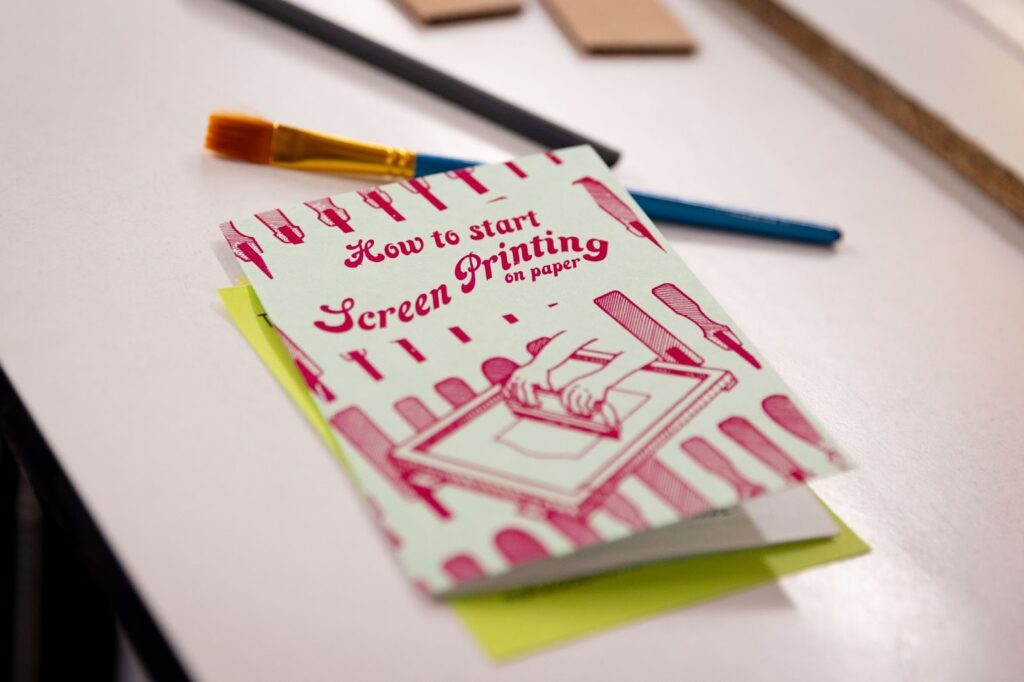
The day’s workshop was on screen printing. A delightful human in polka-dot socks named Melissa Detloff patiently guided our group through the basics of screen printing. Simply put, screen printing, a.k.a. silkscreen printing, involves creating a stencil (or screen) and using it to apply layers of ink on a printing surface, usually fabric or paper.

The process began for us with designing the artwork and then transferring it onto a fine mesh screen coated with a light-sensitive emulsion. The screen is exposed to light, hardening the emulsion except where the design blocks the light, leaving a negative space. The unhardened emulsion is washed away, revealing the stencil. Next, the screen is placed on the printing surface, and ink is poured onto it. A squeegee is used to press the ink through the mesh openings onto the material below. Each color in the design requires a separate screen and layer of ink, which must be applied and dried sequentially. After all layers are printed, the material is cured (dried and set) to ensure the ink is permanent. Finally, the screen is cleaned for reuse, which allows for vibrant, long-lasting prints with precise details.

Melissa has been printmaking and teaching screen printing for many years. She is very good at guiding. We have an eclectic group, and her poise was admirable. It was obvious she knew what to look out for. She even has a postcard club anyone can join, so check her out (https://www.melissadettloff.com/)! Her patience and skills were exhibited excellently as she guided the people in our group. There were prints made of hands, painters, logos, still life, and even a poodle.
The great thing about art as a group is that it is inherently positive, because all the different perspectives all find ways to acknowledge and support fellow creatives during the most sensitive phase of the process. No one is ever left behind.
As I looked around the group during the workshop I could see smiles behind the eyes of my peers.
These were humans that had been where I’d been, have known the pain I’ve known.

However, on this day, we were able to transcend the pain of the past, the fear of the future, and soak in the present moment. Personally, I have been craving these experiences, which are only possible through the synergy created within groups. This taught me that, no matter how much work I do personally, I cannot reproduce the effects of community on my own. It seems that one artist working with another artist is without parallel, or as Bill and Ted once expressed,” two heads are better than one”; I could really feel this during the screen printing workshop.

Walking out of the building, I could not help but take a minute to realize where I was. When I was released from prison, I felt very small and alone. Art has been there for me always, as long as I can remember. In the past, I never sought art but thankfully, it sought me. This experience occurred because PCAP ensured that artists with a voice are heard, no matter where they are within the Michigan Department of Corrections. Once released, I was at risk of returning to an old life riddled with strife, addiction, and pain. Thanks to PCAP, I learned to better manage myself through art while inside prison. I embraced identification and purpose as new attitudes that helped me to embrace this crazy art environment. We, the selected, are fortunate, and we need never forget where we came from or where we are. There is a tremendous gap between prison and success. As artists, it is imperative we are aware of these gifts and work to share all we have been given so freely by the universe. As conscious convicts, it is important that we are honest about our condition. I do this by participating in Linkage, communicating with other artists, and respecting my environment.

Today we worked as group in our own projects, but more importantly we were creating traditions for others to join us on this mission to keep the art going for these artists, such as myself in the future. We ate and we talked about what we wanted to see Linkage do, as a group. There were great ideas, promise, and exciting evolutions yet to be unearthed and on the horizon for sure. You could feel the resonance of life in our meetings’ consciousness. Having the opportunity to meet and talk with other artist folk is always beneficial, but being able to talk and create the future we want to see seems like a magical opportunity. Some I know say you can do anything if you build a nice vision. Maybe that’s what we’ll do next time?

The comprehensive workshops, communication within PCAP community/universe, and/or personal performance, progress, and production will be integral in any Linkage member’s success. The benefits and support of the Linkage program are evident. Consequently, when I see things from the wider view, I can become really grateful about the view because it’s so much more than just screen printing, lunch, and hanging out. It’s the real deal. It’s art. It’s real. It’s modern. It’s relevant. It’s eco-friendly. It’s community. It’s everything. It’s what we struggle to name and define because it comes from a greater consciousness. All I know is I want more. It’s the sauce. It’s PCAP. Its Love. It’s Linkage. What’s the slogan? How about
“PCAP Linkage Artists… Marginalized… no more”.
About the Author:
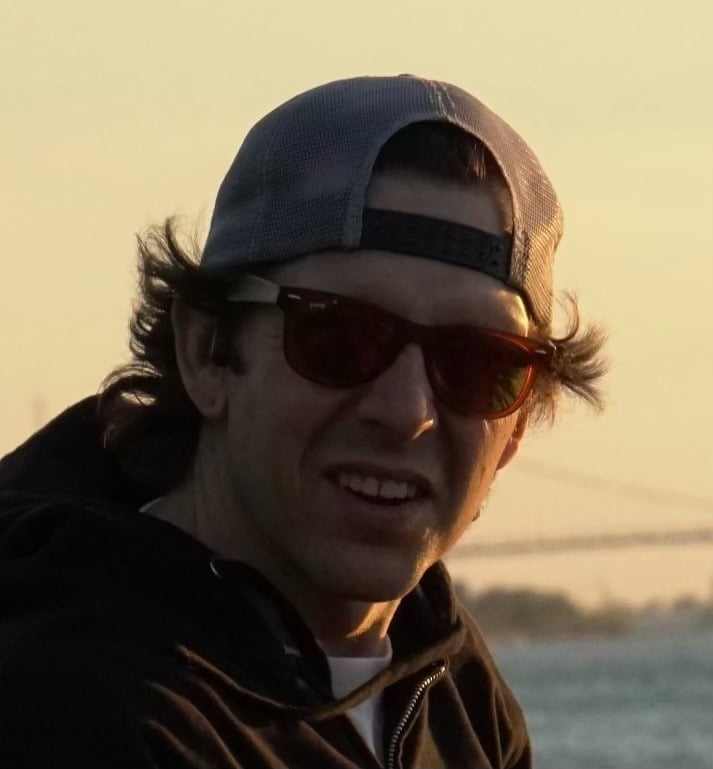
Nick Orozco is a member of the PCAP Linkage program at the University of Michigan, who was born on the East Coast, raised on the West Coast, and settled in East Detroit was heavily exposed and influenced by art history and culture. Nearly ten years into his professional career, Nick has continued to lay the groundwork to subtly explode in the Midwest art market. Nick’s paintings, sculptures, writings, skateboarding, and music embody bold colors and sharp contrasts, always in juxtaposition. What is one position without the other?
Article is made possible by the Linkage Community Journalism Initiative. Photography by U-M’s Office of University Development & the Linkage Community.